
Quick Summary
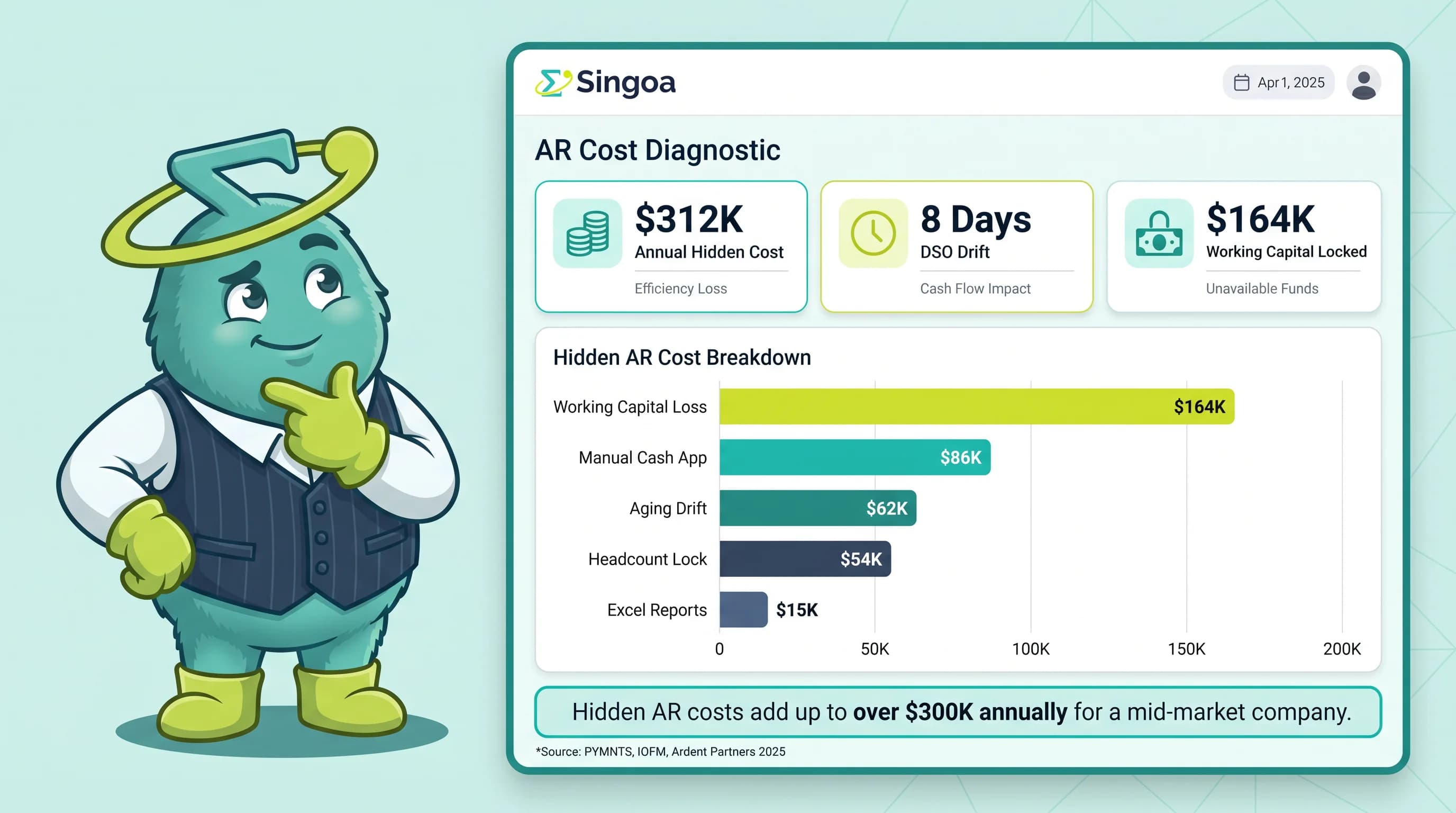
Five signs your AR process costs more than you think: rising DSO; manual cash application taking hours daily; Excel-based aging reports; AR stacking in 60+ day buckets; headcount rising with invoice volume. Each signals $40K-$200K in hidden cost.
Key Takeaways
- A 15-day DSO drift above benchmark locks $820,000 in working capital for a $20M revenue company, the single largest hidden AR cost most CFOs underestimate
- Manual cash application costs an average of 12 minutes per payment, totaling $62,400 annually for teams posting 400 payments monthly, per CFO.com 2025 analysis
- Excel-based aging reports compiled weekly consume 156 controller hours annually, roughly $15,600 in pure compilation time before any analysis happens
- AR concentrated above 10% in 60+ day buckets statistically reduces collection probability below 50%, converting recoverable cash into bad debt write-offs
- Manual AR teams hit a capacity ceiling at 200-350 invoices per FTE monthly, forcing hires at $65,000-$85,000 fully loaded each time growth crosses a threshold
- Adding the five hidden costs together routinely surfaces $200K-$800K in annual savings opportunity, with payback periods of 3-6 months on AR automation investment
Quantify Your Own AR Hidden Cost
Enter your monthly invoice volume, current DSO, and AR headcount. The calculator outputs the dollar gap versus an automated $1-3 per invoice baseline, broken down by working capital, labor, and bad debt.
Your DSO Has Crept Up 8+ Days With No Change in Payment Terms
DSO drift without a corresponding terms change is the clearest single signal of collections process decay, and the most expensive symptom you can ignore.
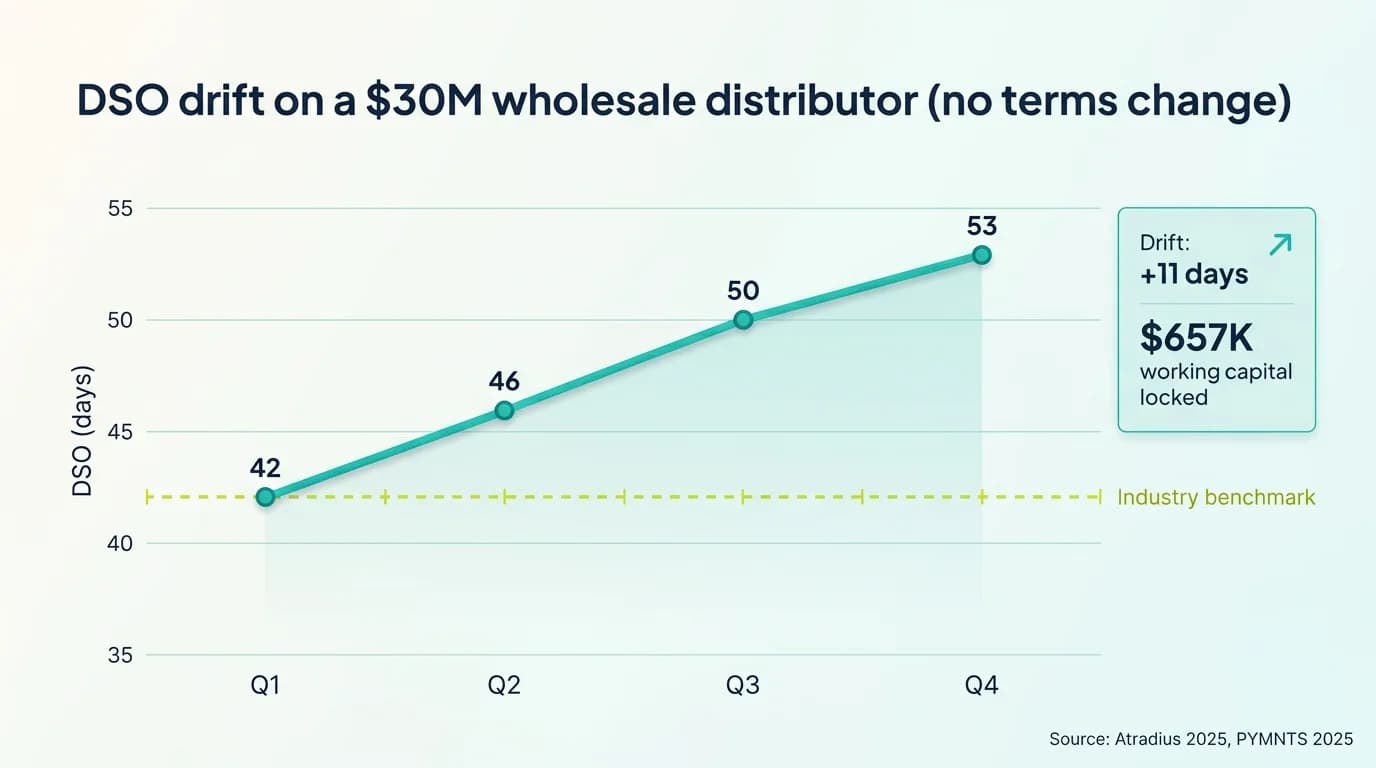
Picture the controller at a $30M wholesale distributor pulling the quarterly DSO trend. Four quarters ago: 42 days. Last quarter: 50. This quarter: 53. No customer received extended terms. No new payer mix. The number simply drifted up by eight days while everyone was busy. According to the Atradius Payment Practices Barometer 2025, 50% of B2B invoices globally are paid late, and the gap widens whenever AR teams cannot prioritize the right accounts each morning.
Each day of DSO drift on a $30M revenue company locks $82,192 in working capital. An eight-day drift means $657,534 sitting in receivables instead of operations. That cash is not lost permanently, but it is unavailable for inventory, hiring, or strategic investment. According to PYMNTS 2025 commercial payment benchmarks, mid-market companies routinely tolerate 12-18 days of unexplained DSO drift before treating it as a process problem rather than a customer problem.
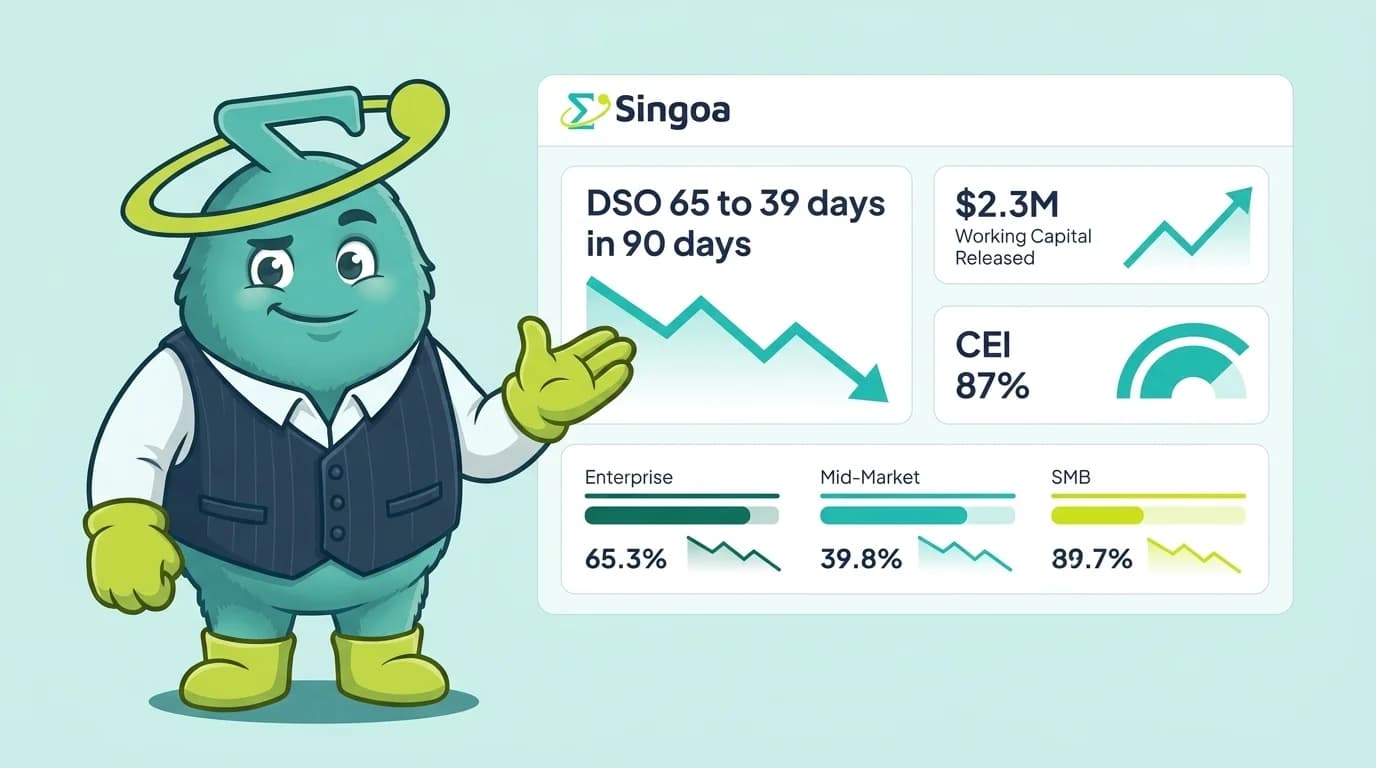
The fix is not adding more reminder calls. It is making the right call to the right account at the right time. AI-driven [collections prioritization](/features) replaces the morning aging report scan with a ranked worklist of the 10-20 accounts most likely to pay if contacted today. Companies adopting this approach typically reverse 60-70% of the unexplained DSO drift within 90 days, well before the next quarterly board meeting forces a public explanation.
Pro Tip
Track Best Possible DSO alongside actual DSO every month. The gap between the two is your controllable improvement opportunity. If actual DSO is 53 and Best Possible DSO is 38, the 15-day gap represents pure collections inefficiency, not customer behavior, and is the number to bring to your weekly AR review.
Cash Application Eats 3+ Hours of Specialist Time Every Day
Daily cash application hours are the most reliable predictor of how broken your AR process really is, and the easiest line item to quantify in a CFO conversation.
A CFO at a 50-employee SaaS company pulls her AR specialist's daily log. Cash application: 3.5 hours. Bank file reconciliation: 45 minutes. Chasing missing remittance data: 1 hour. That is more than half a workday on a single workflow that adds zero strategic value. According to CFO.com's 2025 Metric of the Month analysis, manual cash application takes an average of 12 minutes per payment when remittance data is incomplete or ambiguous.
The economics are straightforward. A team posting 400 payments monthly at 12 minutes each spends 80 hours on manual matching. At a fully loaded specialist cost of $65 per hour, that is $5,200 monthly or $62,400 annually on one workflow. Add the error correction cycles when payments get misapplied. Add the inbound customer calls about miscredited invoices. Add the month-end reconciliation cleanup. The true annual cost crosses $90,000 for many mid-market teams.
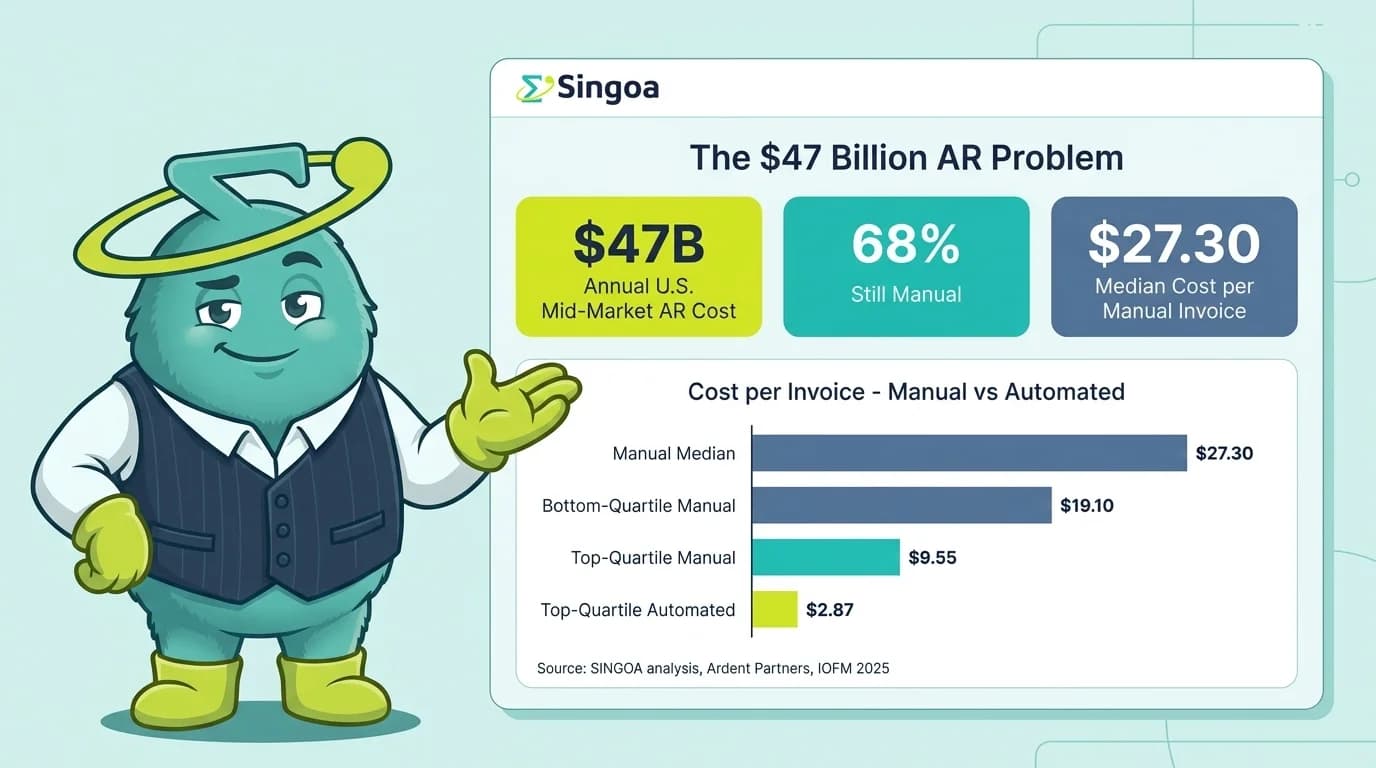
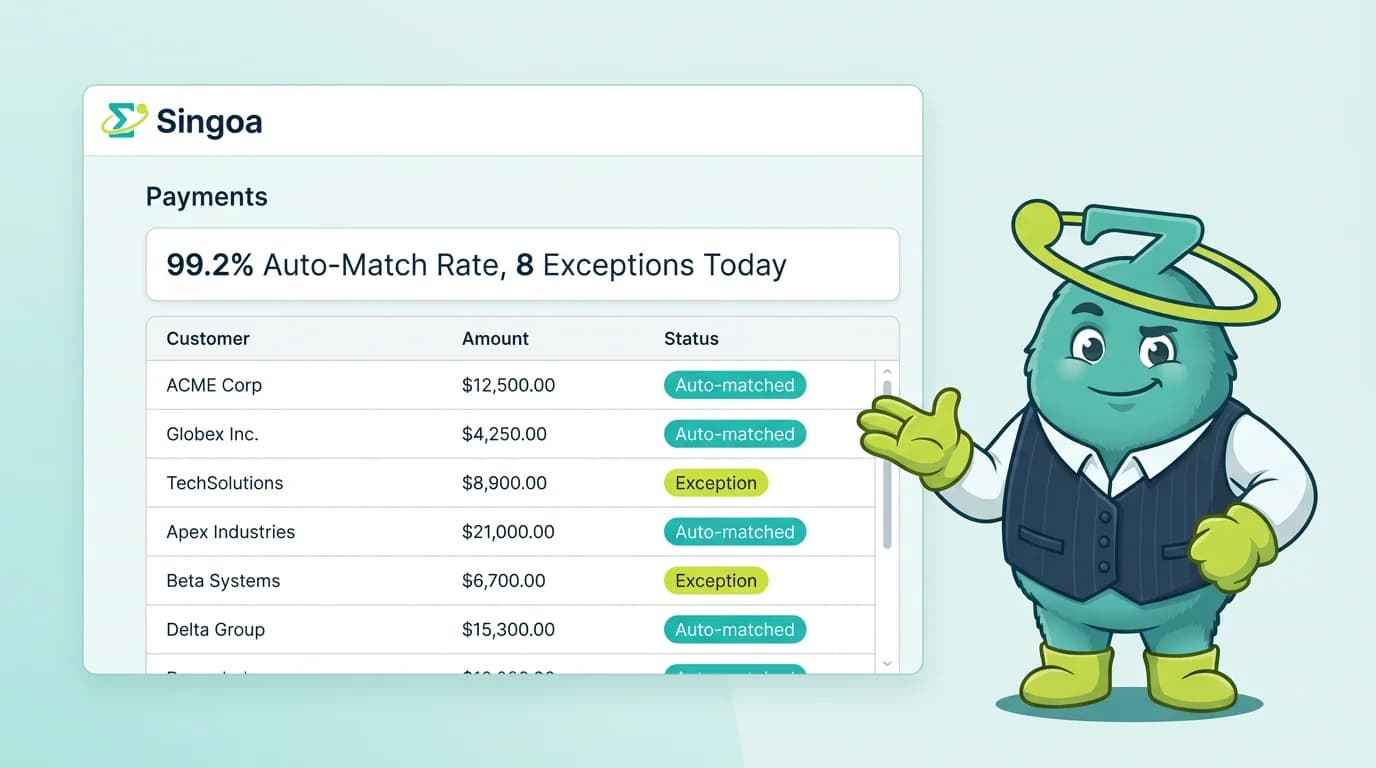
AI-powered [payment matching](/features) reads remittance data from bank files, email attachments, PDF statements, and payment portal records simultaneously. Platforms like SINGOA achieve 99.2% auto-match rates on standard payment types, routing only the remaining exceptions to a human review queue. The 80 monthly hours collapse to 8-12 hours of exception handling, freeing the specialist for strategic collections work that actually moves DSO.
Your Aging Report Still Gets Compiled in Excel Every Monday
Excel-based aging compilation is a surface symptom of a deeper data fragmentation problem that costs you decision speed long before it costs you spreadsheet time.
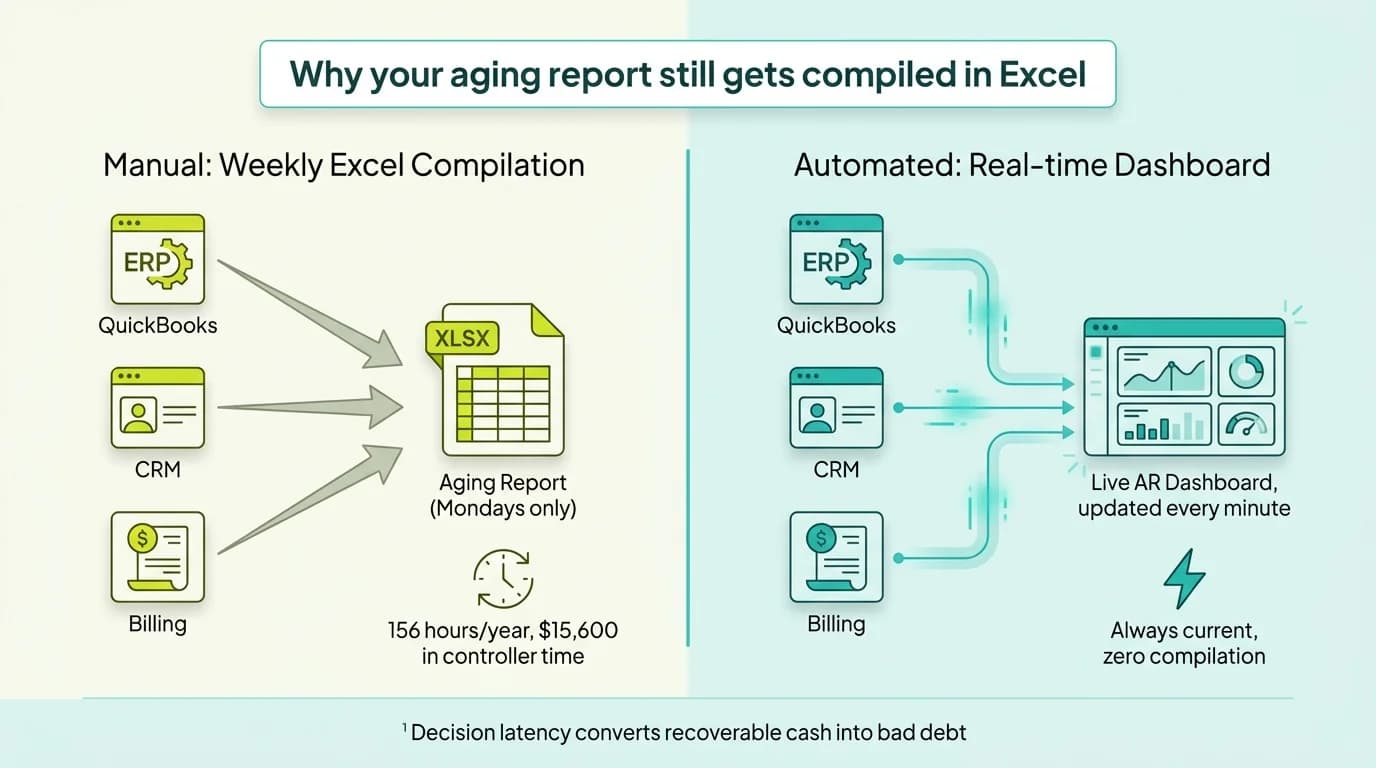
Every Monday morning, the controller at a $25M professional services firm exports an aging report from QuickBooks. She pulls customer payment history from a separate CRM. She joins them in a pivot table. She color-codes the past-due buckets and emails the result to the CEO and head of sales. Three hours, every week, every month. That is 156 hours annually on report compilation, roughly $15,600 in pure controller time before any analysis or decision-making happens.
The compilation hours are the visible cost. The hidden cost is decision latency. Because the aging report only exists on Mondays, the 30-day to 31-day bucket transitions that happen Tuesday through Sunday go unnoticed for up to six days. According to the Credit Research Foundation 2024 analysis, invoices crossing the 60-day mark have measurably lower collection probability than those at 30 days, so every day of decision latency converts recoverable cash into elevated bad debt risk.
Modern AR platforms generate aging reports from live data continuously, not weekly. The controller checks a real-time dashboard instead of compiling one. Tools like the [AI Report Builder](/features) let finance teams query AR health in plain English ("show me all customers above $50K with invoices past 45 days") and get answers in seconds. The 156 annual compilation hours redirect to actual analysis: spotting concentration risk, coaching account managers, and forecasting cash with real precision.
Pro Tip
Audit the data sources behind your weekly aging report. If the compilation pulls from more than two systems (typically ERP plus billing or ERP plus CRM), the underlying problem is data fragmentation, not Excel. Fixing fragmentation through proper integration makes real-time aging trivial. Continuing to compile manually treats the symptom and leaves the cause untouched.
See Where Your AR Stacks Up Against the Mid-Market
Get a free benchmark report comparing your DSO, CEI, and cost-per-invoice against 500+ companies in your industry and revenue band. No sales pitch, just your numbers.
More Than 10% of Your AR Sits in 60+ Day Buckets
Aging concentration above 10% in 60+ day buckets is the leading indicator that recoverable cash is silently converting into bad debt write-offs.
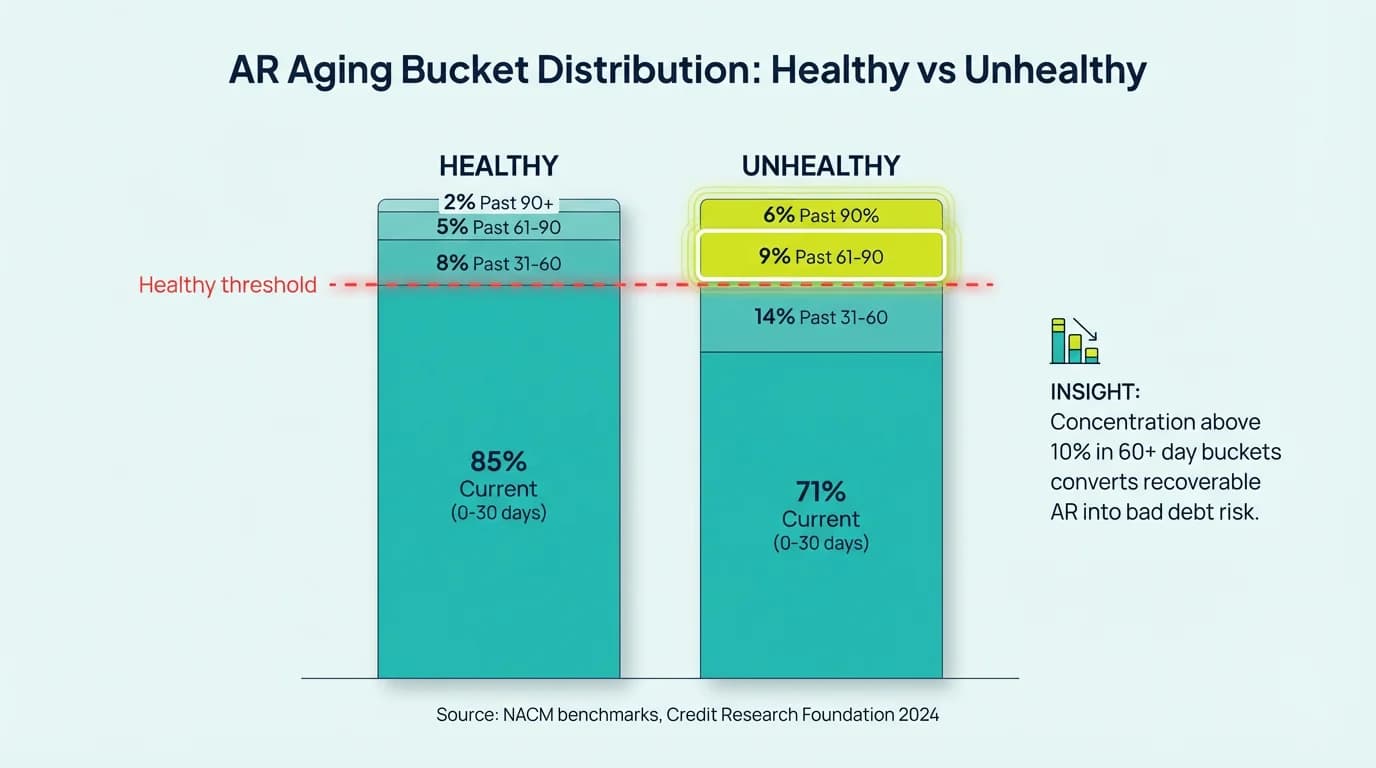
The CFO at a 200-person construction firm reviews the latest aging report. Current (0-30): 71%. 31-60 days: 14%. 61-90 days: 9%. 90+ days: 6%. On the surface, the company has cash flow. Below the surface, 15% of receivables are statistically unlikely to collect at full value. According to NACM benchmarks, healthy distributions hold 85% or more in current. Concentration above 10% in the 60+ day buckets signals collections discipline breaking down before the bad debt ratio reflects it.
The compounding math is harsh. According to the Credit Research Foundation 2024 analysis, collection probability drops below 50% once invoices cross the 90-day mark in most industries. For a $30M company with 6% of AR in 90+ days, that is roughly $144,000 in receivables with a coin-flip chance of recovery. Half of that statistically converts to write-off, meaning $72,000 in annual bad debt traceable to one diagnostic chart most teams glance at and move on.
Reversing aging concentration starts with intervention earlier in the cycle. Automated dunning sequences fire at precisely the right times. They reach customers seven days before due, on the due date, 15 days past, and 30 days past. The cadence catches customers before payment habits harden. AI-powered AR platforms like SINGOA tier these sequences by customer risk score, intensifying outreach on accounts likely to slip while leaving low-risk accounts on lighter cadence. According to PYMNTS 2025, automated multi-channel dunning recovers 30% more past-due invoices than single-channel manual follow-up.
AR Headcount Grows in Lockstep With Invoice Volume
If every revenue milestone forces another AR hire, you are paying linearly for a function that should scale exponentially with the right automation layer.
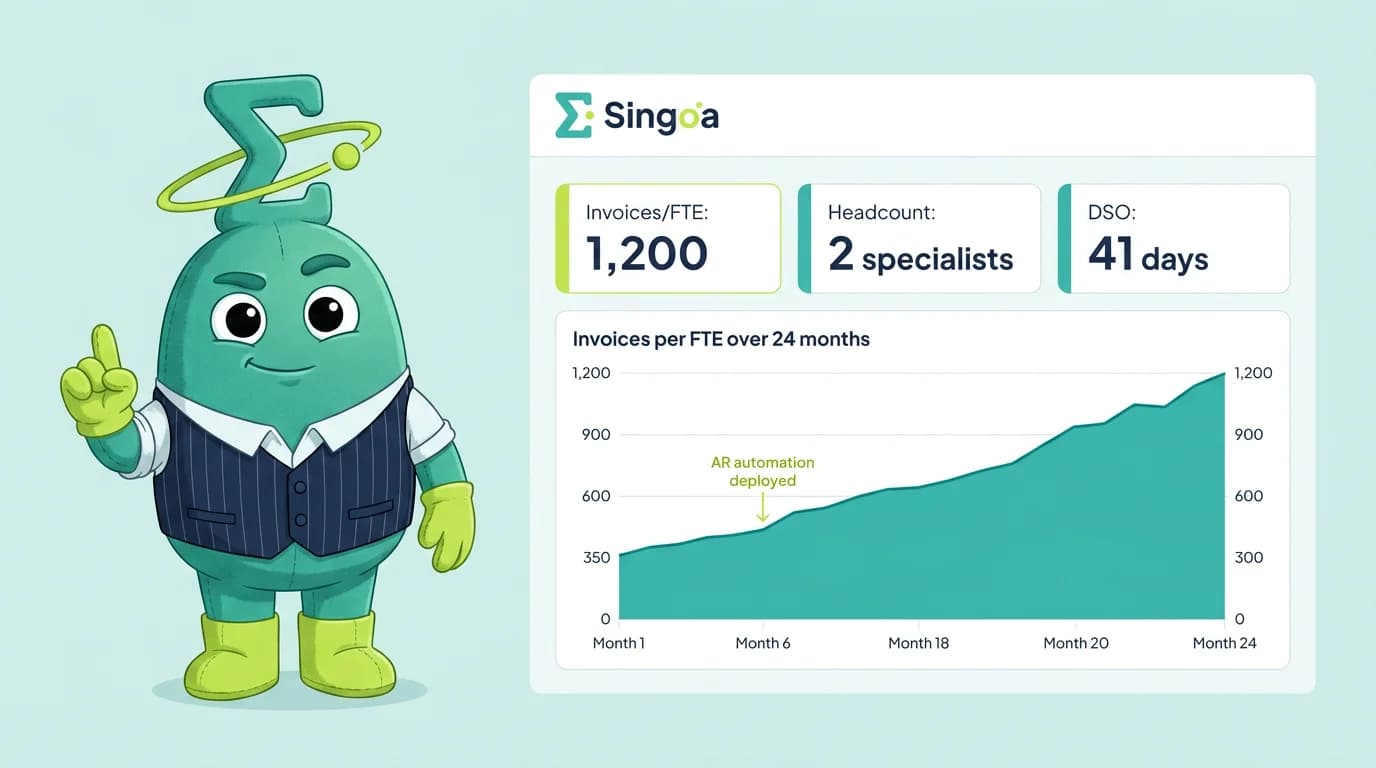
An AR director at a $40M manufacturer just got approval for a fourth specialist. Two years ago the team was two people. Revenue grew 80%, invoice volume grew 110%, and headcount doubled to keep up. According to IOFM 2025 benchmarks, a manual AR specialist hits a quality ceiling at 200-350 invoices per month before reminders slip, cash app falls behind, and DSO drifts. Every 50-60 net new monthly invoices pushes toward another hire at $65,000-$85,000 fully loaded.
The math compounds with growth. A company on track to double revenue in three years also doubles invoice volume, locking in roughly $200,000-$340,000 in annual incremental AR labor cost. That spend is invisible in any single budgeting cycle because each hire feels small in isolation. Aggregated across three years, it represents the most preventable line item in the finance department, completely uncoupled from any strategic value the new specialists deliver.
Companies that escape the headcount trap insert an automation layer between invoice volume and team size. According to Billtrust 2025 State of AI in AR research, AR specialists working with AI-powered automation manage 800-1,500 invoices per month versus the 200-350 manual ceiling. The same two-person team that previously capped at 700 monthly invoices runs 2,500 with no quality loss. Per-invoice pricing of [$1-3](/pricing) versus $65,000-$85,000 per FTE inverts the cost curve from linear to flat.
Pro Tip
Calculate your invoices-per-FTE ratio every quarter alongside DSO. If the ratio is rising and DSO is also rising, you have hit the manual capacity ceiling. If the ratio is rising while DSO is falling, your team is gaining real productivity. The two metrics together separate genuine efficiency from quiet quality erosion that will eventually surface as a board-level cash flow conversation.
6 Quick Wins to Stop the Bleeding This Month
If you recognized your team in two or more of the signs above, these six actions take under 2 hours each and surface measurable cost reduction inside 30 days.