Healthcare AR in 2026: the denial-and-DAR crisis
US healthcare providers lose $20 billion every year to denied claims that never get reworked, and the initial denial rate has climbed past 11.65% according to Experian Health's State of Claims 2025. For a mid-market provider group running 8,000 claims a month, that translates to roughly $180,000 in monthly revenue stuck in CARC code limbo before patient self-pay aging even enters the picture. Most RCM directors already see the trend on their MGMA dashboard. Days in AR drifts past 50. Patient balances under $200 quietly convert to bad debt. Billers spend half their week posting ERAs against expected reimbursement and the other half drafting appeal letters for CARC 16, CARC 197, and CARC 50 denials they have seen a hundred times before.
The 2026 numbers are not subtle. According to the [Experian Health State of Claims 2025](https://www.experian.com/healthcare/about/news-press/2025/state-of-claims-2025), initial denial rates now sit between 10% and 15% across most US providers, with 41% reporting rates above 10%. Hospital initial denial rate alone runs at 11.65%. On the receivables side, average days in AR sits near 52 days at mid-market provider groups, well off the MGMA top-performer benchmark of fewer than 40 days that boards now treat as table stakes. Translate those percentages into cash. US providers leave roughly $20 billion in unrecovered denied claim dollars on the table every year. Reworking a single claim costs $25 on the low end and $181 at the high end once you count biller time, coder time, appeal documentation, and the second-pass clearinghouse fees. A 1,000-bed system at 11% denials throws away the equivalent of 3 FTEs just on rework that should have been prevented at first submission.
Patient AR makes the picture worse. Self-pay balances under $200 are the fastest-aging segment in healthcare receivables, and they convert to bad debt faster than insurance AR ever does. As high-deductible plans push more responsibility to the patient, RCM teams who built workflows around payer-first collections find their bad-debt write-offs growing quarter over quarter. Most of the published guidance addresses either solo-practice billing software or 1,000+ bed hospital RCM. Mid-market is underserved. If you run a multi-site provider group, an ambulatory surgery center, a behavioral health network, an urgent care chain, or a DME supplier between $5M and $500M in revenue, you need HIPAA-grade compliance, denial automation, and a patient-pay portal in one stack. Generic AR tools cannot sign a BAA. Hospital-scale RCM platforms cost more than your billing team. Here is where it gets interesting: a small set of healthcare-native platforms (think [SINGOA for healthcare](/industries/healthcare)) now fill that gap, and the next six sections show what to evaluate.
10-15%
Initial healthcare claim denial rate in 2026, with 41% of providers reporting >10%
Experian Health State of Claims 2025
11.65%
Hospital initial denial rate average
Experian Health State of Claims 2025
$20B
Annual US provider revenue lost to unrecovered denied claims
Aptarro US Healthcare Denial Statistics 2026
$25-$181
Cost to rework a single denied claim across biller, coder, and clearinghouse fees
CAQH / Aptarro industry benchmarking, 2026
52 days
Average days in AR at mid-market provider groups vs MGMA top-performer <40
MGMA Practice KPI Benchmarks, 2024
69%
Healthcare providers using AI that report reduced denials and higher resubmission success
Aptarro US Healthcare Denial Statistics 2026
Common Pain Points
- Denial backlog with three CARC codes accounting for most preventable denials: CARC 16 (missing/invalid info), CARC 97 (bundled service), and CARC 197 (precertification/prior auth missing), with aged denials past 90 days quietly becoming write-offs
- Manual 835 ERA posting consumes 25-35 hours per week of skilled biller labor at 8,000 monthly claims, performing line-by-line variance review that pattern-matching software handles in seconds
- Patient self-pay balances under $200 are the fastest-aging segment in healthcare receivables, quietly aging past 90 days into bad debt as high-deductible plans push more responsibility to patients
- Days-in-AR drift from MGMA's sub-40-day top-performer benchmark toward the 50-60 day range that mid-market provider groups report, with the CFO spotting the trend on the cash-flow forecast and asking why
- HIPAA compliance gaps when bolting on generic AR tools that will not sign a BAA, were not architected for PHI handling, and lack role-based minimum-necessary access or 6-year audit retention
- Five pain points compound: denial backlog pushes DAR up, which pushes patient AR past the point of collectability, which forces a write-off, which forces a vendor evaluation under time pressure
Industry Terminology Guide
See your healthcare AR automation ROI
Plug in your monthly claim volume and current denial rate to see what 30-50% denial recovery and DAR reduction translate to in annual cash flow.
How AR automation solves each healthcare problem
Generic AR vendor language gets in the way of healthcare buying decisions. When a sales engineer says 'invoice', your billers hear 'claim'. When they say 'remittance', your RCM director hears '835'. When they say 'customer', your front-desk staff knows there are actually two: the payer (commercial, Medicare, Medicaid) and the patient (coinsurance, deductible, self-pay). Healthcare AR automation solves denials with AI CARC/RARC classification and auto-drafted appeal templates, posts ERAs automatically against expected reimbursement, collects patient balances through branded self-service portals with payment plans, and surfaces DAR drift on real-time dashboards split by payer mix.
AI Denial Classification and Auto-Drafted Appeals
Read inbound 835 ERAs, classify CARC and RARC code combinations, route each denial to the right work queue, and auto-draft the payer-specific appeal letter from EHR-pulled documentation.
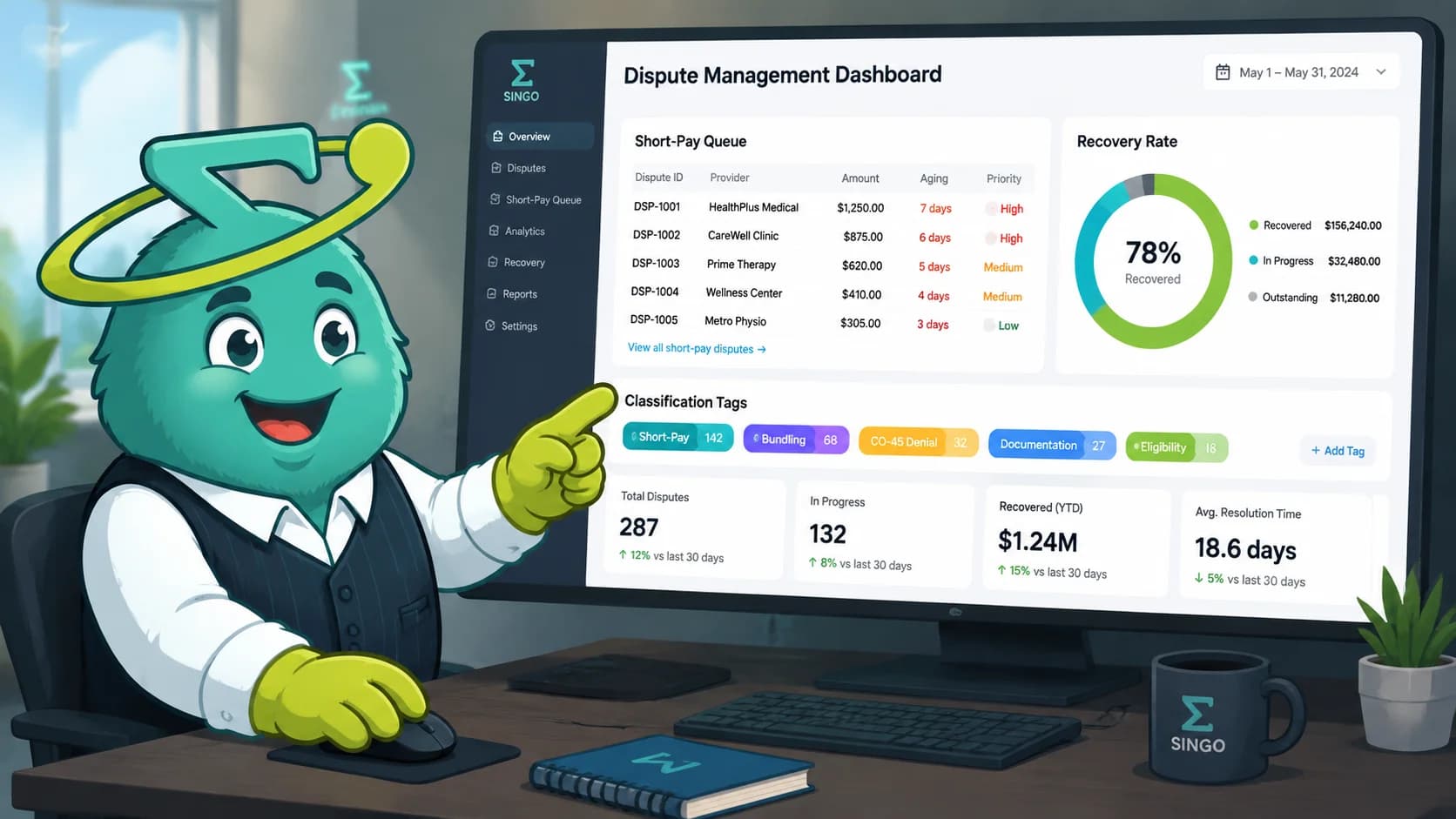
Start with denials, because that is where the dollars are. AI denial classification reads the inbound 835, identifies the CARC and RARC combination, and routes each denial to the right work queue. A CARC 197 (prior auth) goes to a queue with the auth-request template pre-filled. A CARC 16 (missing info) goes to the biller with the specific data element flagged. The system can auto-draft the appeal letter from a payer-specific template, attach supporting documentation pulled from the EHR, and resubmit through the clearinghouse. Healthcare providers using AI report 30 to 50% fewer denials via proactive prevention, with 69% reporting improved resubmission success.
The honest caveat: automation does not replace certified medical coders, compliance officers, or payer-contract specialists. It removes the volume of repetitive low-judgment tasks so the experts you already hired can focus on the cases that need their expertise. A platform that promises to replace your coding team is selling you compliance risk, not productivity. See [structured dispute and denial workflows](/blog/dispute-management-ar-structured-workflows) for the cross-industry pattern that maps directly to healthcare CARC/RARC routing.

Auto-Posting 835s Against Expected Contracted Reimbursement
Compare each ERA line against your payer fee schedule. Lines within tolerance post automatically; lines outside tolerance flag for review with the variance highlighted.
Auto-posting 835s against expected reimbursement is the next lever. The platform compares each ERA line against the contracted rate from your payer fee schedule. Lines within tolerance post automatically. Lines outside tolerance (underpayments, unexpected contractual adjustments, capitation surprises) flag for review with the variance highlighted. Mid-market practices typically cut ERA posting time by 60 to 70%, freeing senior billers for the high-judgment work of payer contract enforcement and appeal escalation.
ERAs land in the clearinghouse mailbox, a biller downloads them, opens the practice management system, posts each line against the expected contracted rate, and flags variances for review. At 8,000 monthly claims, that is roughly 25 to 35 hours a week of skilled labor performing a task that pattern-matching software handles in seconds. Auto-posting also surfaces underpayments that manual posting often misses: a 3% systematic underpayment from one commercial payer hides easily in line-by-line entry but jumps out immediately when the variance dashboard rolls up the pattern.
Cut days in AR without adding RCM headcount
Mid-market healthcare orgs using SINGOA pull DAR from 52 to under 42 on the same team, with a signed BAA and full Epic, Cerner, and athenahealth integration.
Branded Patient Payment Portal with Payment Plans
Move patient self-pay collections out of the paper-statement era with a branded portal supporting balance-by-visit views, payment plans, card-on-file, and ACH or credit card payments.
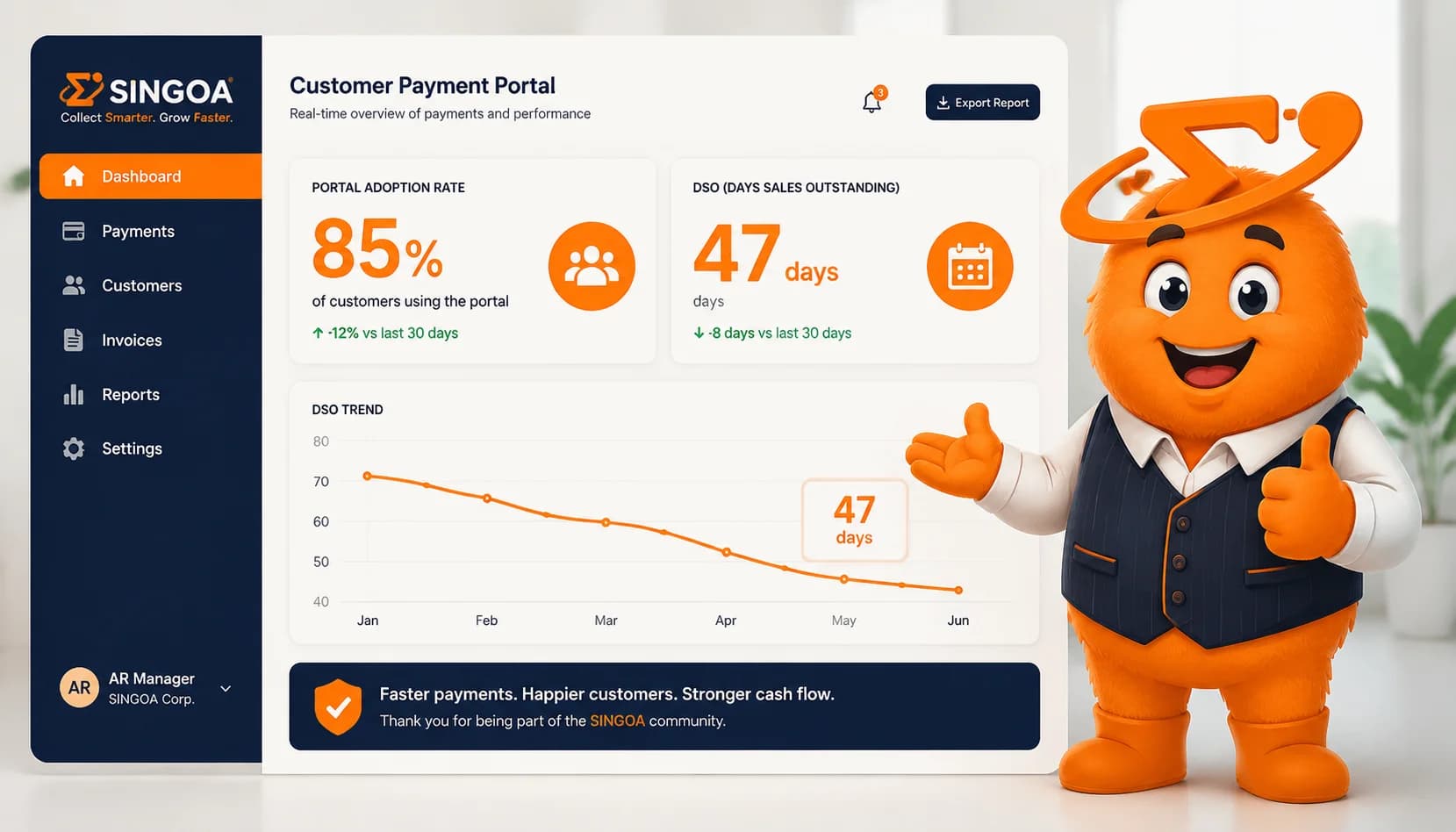
Patient self-pay collections move out of the paper-statement era. A branded payment portal lets patients see balances by visit, set up payment plans, store a card on file, and pay via ACH or credit card. Look for solutions that handle both patient balance questions and payer-side denials in one queue, so RCM staff stop swivel-chairing between systems. SINGOA's patient-pay portal reaches 85% adoption when deployed correctly, which moves the under-$200 segment off the bad-debt trajectory.
Statements go out monthly, payments arrive via paper check, lockbox, or a portal that nobody loves, and balances under $200 quietly age past 90 days into bad debt. The fix is not aggressive collections; it is removing friction. Patients pay when the portal is one click from the appointment confirmation email, when the balance breakdown is in plain English instead of CARC codes, and when a $400 balance can be split into four $100 monthly payments without a phone call. See the [85% patient portal adoption playbook](/blog/customer-payment-portal-85-percent-adoption) for the deployment pattern that produces that adoption rate.
Real-Time DAR Dashboards Split by Payer Mix
Replace single rolled-up DSO numbers with aging splits by payer (Aetna 90-day, Medicare 60-day, patient responsibility 30-day) so the CFO sees where the problem actually lives.
DAR visibility is the fourth lever. Real-time dashboards split aging by payer (Aetna 90-day bucket, Medicare 60-day bucket, patient responsibility 30-day bucket) instead of presenting a single rolled-up number that hides where the problem lives. A CFO viewing AR by payer can spot when one commercial payer's average days-to-pay shifts from 32 to 41 and pick up the phone before it shows up in next quarter's cash forecast. AI-powered AR tools such as SINGOA combine smart-collections, payment-matching, dispute-management, and payment-portal into one HIPAA-grade workflow, which is the integration test that separates a healthcare-native solution from a stitched-together stack.
What most people miss: the five pain points compound. A denial backlog pushes DAR up, which pushes patient AR past the point of collectability, which forces a write-off, which the CFO notices, which forces a vendor evaluation under time pressure, which leads to a non-HIPAA-grade tool, which then triggers a compliance audit finding. Solving them in isolation never works. The DAR dashboard is what surfaces the compounding effect early enough to act on it.
EHR, PM, and clearinghouse integrations that matter
The integration list separates real healthcare AR platforms from generic AR tools wearing a healthcare label. Tier-1 EHR/PM connectivity, dual clearinghouse support, and GL writeback are the three layers any healthcare AR automation platform must cover natively. 'Generic FHIR API support' is not the same as a tested production integration with Epic Resolute. Ask for a reference customer on your specific EHR before you sign.
Epic (Resolute PB / Resolute HB)
Bidirectional sync with Epic Resolute professional billing and hospital billing modules. Claim status, 835 ERA ingestion, patient balance writeback, and denial work queue handoff all run through named-module connectivity, not generic FHIR endpoints.
Oracle Health / Cerner Millennium
Real-time sync with Oracle Health (formerly Cerner Millennium) for claim status, ERA posting, and patient demographics. Tested production integration with a reference customer footprint required.
athenahealth athenaCollector
Native integration with athenaCollector for claim submission status, ERA posting, denial routing, and patient balance synchronization. Bidirectional updates rather than CSV uploads.
NextGen Healthcare
PM-level integration covering schedule, charge capture, claim status, and ERA posting. Supports both ambulatory and specialty NextGen deployments.
eClinicalWorks
Charge capture, claim status, and ERA posting integration with eClinicalWorks PM. Covers single-site practices and multi-location specialty groups.
Kareo / Tebra
Direct PM integration for small-and-mid-market specialty practices on Kareo/Tebra. Claim status, ERA, and patient balance sync without manual file handoffs.
AdvancedMD
Bidirectional sync with AdvancedMD for claim submission, ERA posting, denial routing, and patient self-pay reconciliation.
Waystar (clearinghouse)
Direct connection for 837 claim submission, eligibility checks, claim status inquiries, and 835 ERA delivery. ERAs are read from your Waystar mailbox automatically with no manual download step.
Availity (clearinghouse)
Dual clearinghouse support: 837 submission, real-time eligibility, and 835 ERA delivery via Availity for payers and lines of business not on Waystar.
QuickBooks / NetSuite / Sage Intacct
GL posting closes the loop. Healthcare CFOs reconcile cash to the general ledger weekly, so posted payments, contractual adjustments, and bad-debt write-offs push to QuickBooks, NetSuite, or Sage Intacct without manual journal entries. The [SINGOA integrations catalog](/integrations) covers all three.
HIPAA compliance: what to demand from any AR vendor
Any healthcare AR vendor handling PHI must sign a Business Associate Agreement (BAA), encrypt in transit with TLS 1.2+ and at rest with AES-256, enforce minimum-necessary role-based access, log every PHI access event with 6-year retention, and meet the HIPAA 60-day breach notification rule. SOC 2 Type II is a complementary trust signal but not a substitute for HIPAA controls. The [HHS HIPAA Security Rule](https://www.hhs.gov/hipaa/for-professionals/security/laws-regulations/index.html) is explicit about each requirement below.
Business Associate Agreement (BAA)
Under the HIPAA Privacy Rule and Security Rule, any vendor that creates, receives, maintains, or transmits PHI on your behalf is a business associate and must sign a BAA before they touch a single 835 file. Generic AR vendors that refuse, delay, or hand you a hand-edited template are signaling that healthcare is not actually their market. Ask the vendor for their BAA template before the demo, not after.
Encryption in Transit and at Rest
Demand TLS 1.2 or higher for every PHI transmission and AES-256 at rest for every PHI store including database, backups, and log archives. Ask for the encryption-key management approach: customer-managed keys, hardware security modules, or vendor-managed with documented rotation. Vague answers like 'enterprise-grade encryption' are not answers; they are marketing copy.
Minimum-Necessary Role-Based Access (RBAC)
Access control follows the HIPAA minimum-necessary standard. Role-based access should separate billers, coders, RCM managers, and finance staff so each role sees only the PHI required for their task. A biller working a CARC 16 denial does not need clinical notes; a coder reviewing a chart does not need patient credit card data. The platform must enforce these boundaries by default, not via a complex configuration the customer has to maintain.
Audit Logging with 6-Year Retention
Every PHI access event (view, edit, export, print) must be logged with user, timestamp, and record identifier, and retained for 6 years. Audit logs are the first thing OCR will ask for during an investigation, so 'we have logs somewhere' is not an acceptable answer.
60-Day Breach Notification Rule
The 60-day breach notification rule means your vendor must detect and report a breach to you with enough time for you to notify affected individuals within 60 days. Vendors without a documented detection and notification SLA put your compliance posture at risk.
SOC 2 Type II as Complementary Signal
SOC 2 Type II adds an independent assurance layer for your IT security team, but it does not replace HIPAA controls. The vendor with both a clean BAA process and a current SOC 2 Type II report is the rare one. Make both a hard requirement before you sign.
ROI: denial recovery, DAR reduction, and staff hours saved
Work the math on denial recovery first because it produces the fastest payback. A practice billing $50M annually at an 11% denial rate has $5.5M in initial denied claims each year. Industry data from [Aptarro US healthcare denial statistics 2026](https://aptarro.com/blog/us-healthcare-denial-rates-reimbursement-statistics/) shows only 65% of denied claims ever get reworked, and only 60-70% of those get paid. AI denial workflows recover an incremental 30 to 50% of the leakage. On the $50M baseline, that is $300,000 to $500,000 in net new annual revenue, before any DAR improvement.
DAR reduction is the second lever and the one your CFO will quote on the board call. Pulling days in AR from 52 to 40 on a $50M practice frees roughly $1.6M in working capital ($50M divided by 365, multiplied by 12 days). That is not new revenue; it is cash that moves from receivable to bank account weeks earlier. For practices using a line of credit to bridge payroll, the interest savings alone often cover the AR platform cost. Staff hours saved is the third lever. Mid-market practices typically eliminate 60-70% of manual ERA posting time. For an 8,000-claim-per-month operation, that is 15 to 25 hours per week of senior biller time redirected from data entry to denial work, payer escalations, and patient outreach.
Worked 90-day payback example: a 12-provider multispecialty group with $40M revenue, 11% denial rate, 51-day DAR, and 3 FTE in ERA posting. AR automation drives denial recovery up by $260K annually, frees $1.3M in working capital, reallocates 1.5 FTE worth of posting time to higher-judgment work, and lifts patient self-pay collections by $90K. At a typical platform cost between $60K and $120K annually, payback lands inside the first quarter. The numbers shift with payer mix and starting denial rate, but the pattern is consistent across mid-market healthcare. Prioritize denial automation over patient portal in your first 30 days because denial recovery dollars typically outweigh patient self-pay improvements 3:1 in the first quarter, and the cash recovered funds the broader rollout without a separate budget conversation.
30-50%
Incremental denied claim dollars recovered with AI denial workflows
Aptarro US Healthcare Denial Statistics 2026
52 to 38-42 days
Days in AR reduction from industry average to typical post-deployment target
MGMA Practice KPI Benchmarks; mid-market deployment data
60-70%
Manual 835 ERA posting hours eliminated for mid-market practices
Mid-market healthcare AR deployment benchmarking, 2026
85%
Patient self-service payment portal adoption when deployed correctly
SINGOA customer payment portal benchmarking
69%
Healthcare providers using AI reporting reduced denials and higher resubmission success
Aptarro US Healthcare Denial Statistics 2026
Under 90 days
Typical payback period for mid-market healthcare AR automation at $40M-$50M revenue
Mid-market provider group case data, 2026
- Recover $300K-$500K in net new annual revenue on a $50M baseline through 30-50% better denial recovery via AI CARC/RARC routing and auto-drafted appeals
- Free $1.6M in working capital by pulling DAR from 52 to 40 days on a $50M practice; cash moves from receivable to bank account weeks earlier
- Reallocate 15-25 hours per week of senior biller time per 8,000 monthly claims from manual 835 posting to denial work, payer escalations, and patient outreach
- Move under-$200 patient balances off the bad-debt trajectory with an 85% adoption patient portal that supports payment plans, card-on-file, ACH, and credit card
- Surface payer-specific days-to-pay anomalies on a real-time DAR dashboard before they show up in the next quarter's cash forecast, with [DSO reduction strategies for 2026](/blog/reduce-dso-proven-strategies-2026) as the broader playbook